
Choosing the Right Fire Extinguisher Class for Your Business and Fire Risks
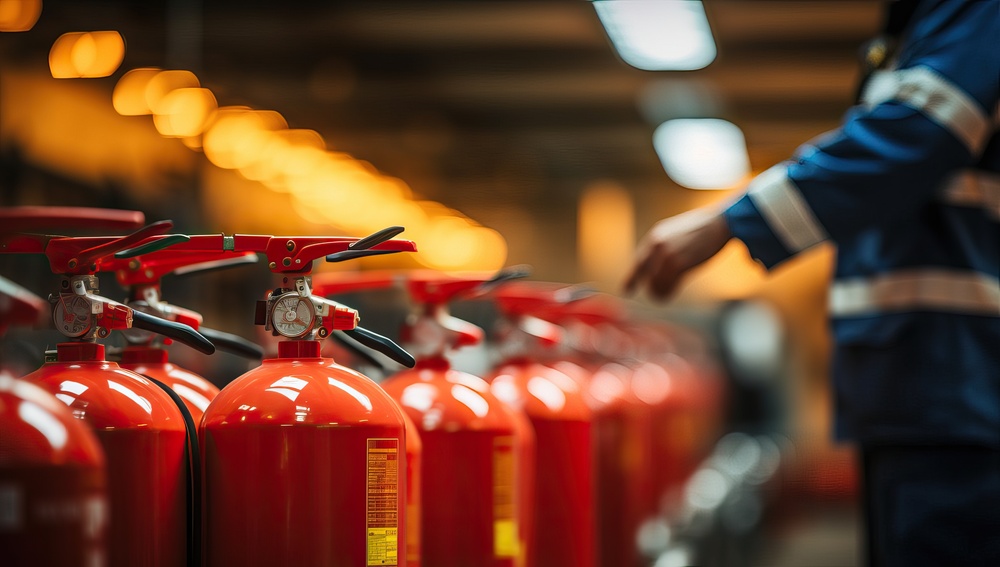
Different types of fire extinguishers are designed to handle different fuel sources, and using the wrong one can make a fire worse instead of stopping it. Business owners across New Jersey, Eastern Pennsylvania, and Northern Delaware often ask what types of fire extinguishers they need for their specific building.
The answer depends on what materials, equipment, and hazards exist inside your facility. This guide breaks down the classes of fire extinguishers, what each one is rated for, and how to match protection to your actual fire risks.
Key Takeaways
- Fire extinguishers are classified by the type of fuel they are designed to suppress safely.
- Class A, B, C, D, and K extinguishers each address a distinct category of combustible material.
- Most commercial buildings need multiple extinguisher types placed according to occupancy and equipment layout.
- Regular inspection, correct placement, and staff training keep extinguishers ready when a fire actually starts.
Match Fire Extinguisher Classes to Your Business Fire Risks
Every commercial property contains unique fire hazards based on its operations, equipment, and materials. Understanding what each fire extinguisher class protects helps businesses install the right equipment for every area while supporting fire code compliance and emergency preparedness.
Class A Fire Extinguishers Protect Ordinary Combustibles
Class A fire extinguishers protect against fires involving paper, wood, cardboard, cloth, and certain plastics. These hazards are common in offices, schools, retail stores, and warehouses. Class A extinguishers typically use water or dry chemical agents to stop fires from spreading. Facilities should provide Class A coverage wherever ordinary combustibles are present.
Class B Fire Extinguishers Protect Flammable Liquids and Gases
Class B fire extinguishers are designed for flammable liquids and gases, including gasoline, oil, solvents, and certain paints. These hazards are common in auto repair shops, manufacturing facilities, and chemical storage areas. Class B extinguishers use dry chemical, foam, or carbon dioxide agents to suppress flames. Water should never be used because it can spread burning liquids.
Class C Fire Extinguishers Protect Energized Electrical Equipment
Class C fire extinguishers protect energized electrical equipment, including panels, wiring, and machinery. Carbon dioxide (CO₂) extinguishers are often used because they leave no residue on sensitive equipment. Server rooms, electrical closets, and mechanical rooms commonly require Class C protection. Electrical hazards should always be evaluated separately from other fire risks.
Class D Fire Extinguishers Protect Against Combustible Metal Fires
Class D fire extinguishers are designed for combustible metals such as magnesium, titanium, and sodium. These hazards are less common but may exist in manufacturing and metalworking facilities. Specialized dry powder agents safely suppress metal fires where standard extinguishers cannot. Businesses handling combustible metals should determine whether Class D protection is required.
Class K Fire Extinguishers Protect Commercial Kitchen Hazards
Class K fire extinguishers protect against fires involving cooking oils, greases, and fats in commercial kitchens. Restaurants, hotels, and food service facilities typically place them near fryers and cooking equipment. Wet chemical agents cool burning oil and help prevent reignition. Class K extinguishers are used alongside kitchen hood suppression systems for complete protection.
Most Commercial Buildings Require Multiple Fire Extinguisher Classes
Many commercial buildings contain multiple fire hazards, making one extinguisher class insufficient. Offices, kitchens, mechanical rooms, and storage areas often require different types of extinguishers. Evaluating each area by its specific hazards helps identify gaps in protection.
ABC-Rated Fire Extinguishers Simplify Protection Across Multiple Hazards
ABC-rated fire extinguishers combine protection for ordinary combustibles, flammable liquids, and electrical equipment in one unit. Their versatility makes them a common choice for offices, retail stores, and many commercial facilities. However, they should not replace Class D or Class K extinguishers where specialized hazards exist.
Key Factors for Selecting and Maintaining the Right Protection
Selecting the right fire extinguishers involves more than choosing the correct class. Proper sizing, placement, inspection, and maintenance all play a role in keeping commercial facilities compliant and prepared for fire emergencies.
Sizing Extinguishers to Occupancy and Square Footage
Extinguisher placement depends on the size of the facility and the number of occupants, not just the hazard type. Larger spaces often require additional units to meet travel-distance requirements. A single extinguisher in a back hallway may not provide adequate coverage for a 20,000-square-foot warehouse. Facilities should map extinguisher locations to their floor plans rather than relying on a fixed unit count.
Mounting Height and Accessibility Requirements
Extinguishers must be mounted at accessible heights and kept clear of storage, equipment, and other obstructions. Fire codes typically establish mounting height requirements based on extinguisher weight. Blocked or improperly mounted units are a common inspection finding. Regular walk-throughs help confirm each extinguisher remains visible and accessible.
Annual Inspection and Hydrostatic Testing Schedules
Annual inspections verify an extinguisher’s pressure, condition, and readiness for service. Most extinguishers also require periodic hydrostatic testing to confirm the cylinder can safely hold pressure. Missing these inspections can leave equipment unreliable during an emergency. Inspection records should be maintained for compliance and fire marshal reviews.
Training Staff to Use the PASS Method
Even the correct extinguisher is only effective if employees know how to use it. The PASS method, standing for pull, aim, squeeze, and sweep, is the standard operating technique. Training should be included during employee onboarding and reinforced through regular safety refreshers. Well-trained staff can respond more confidently during an emergency.
Signage and Wayfinding for Fast Response
Clear signage helps employees and visitors quickly locate fire extinguishers during an emergency. Fire codes often require extinguisher locations to be clearly identified. Warehouses, large facilities, and complex layouts may benefit from elevated or illuminated signage. Proper wayfinding supports a faster emergency response.
Replacing Outdated or Non-Compliant Units
Damaged extinguishers, missing inspection tags, and aging equipment are common compliance issues. Units with missing service documentation may be considered non-compliant during an inspection. Replacing outdated equipment before deadlines helps avoid violations and unexpected costs. Tracking inspection dates and equipment age simplifies replacement planning.
Documenting Compliance for Insurance and Audits
Insurance carriers and fire officials often request records showing extinguisher locations, inspections, and service history. Organized documentation simplifies audits and supports insurance claims after a fire. Keeping an up-to-date log also helps identify maintenance needs and coverage gaps before they become compliance issues.
Get Expert Guidance on Fire Extinguisher Selection
Choosing the right mix of fire extinguisher classes takes more than a quick walkthrough; it requires matching each hazard to the correct protection. Confires works with commercial properties across New Jersey, Eastern Pennsylvania, and Northern Delaware to evaluate fire risks and recommend appropriate coverage.
If your building has mixed hazards, aging units, or unclear compliance status, a professional review can clarify what your space actually needs. Contact us to schedule a fire extinguisher assessment for your facility.
Frequently Asked Questions
What are the 4 types of fire extinguishers?
The four most common types are Class A for ordinary combustibles, Class B for flammable liquids, Class C for electrical fires, and Class K for cooking oils. Class D covers combustible metals in specialized settings.
What are Class ABC and D fire extinguishers?
ABC extinguishers combine coverage for ordinary combustibles, flammable liquids, and electrical fires in one unit. Class D extinguishers are separate units designed specifically for combustible metal fires found in certain manufacturing environments.
What are the 5 classes of fire?
The five classes are Class A (ordinary combustibles), Class B (flammable liquids and gases), Class C (electrical equipment), Class D (combustible metals), and Class K (cooking oils and fats).
What are the 5 types of fire extinguishers and their colors?
Extinguishers are often color-coded by agent: water (red with white band), foam (red with cream band), CO2 (red with black band), dry powder (red with blue band), and wet chemical (red with yellow band).
Category: Fire Extinguishers Let us help.
Fill out the form and a Confires fire safety specialist will contact you.
Let us help.
Fill out the form and a Confires fire safety specialist will contact you.