
Choosing the Right Fire Extinguisher for Commercial Kitchens Across the Delaware Valley
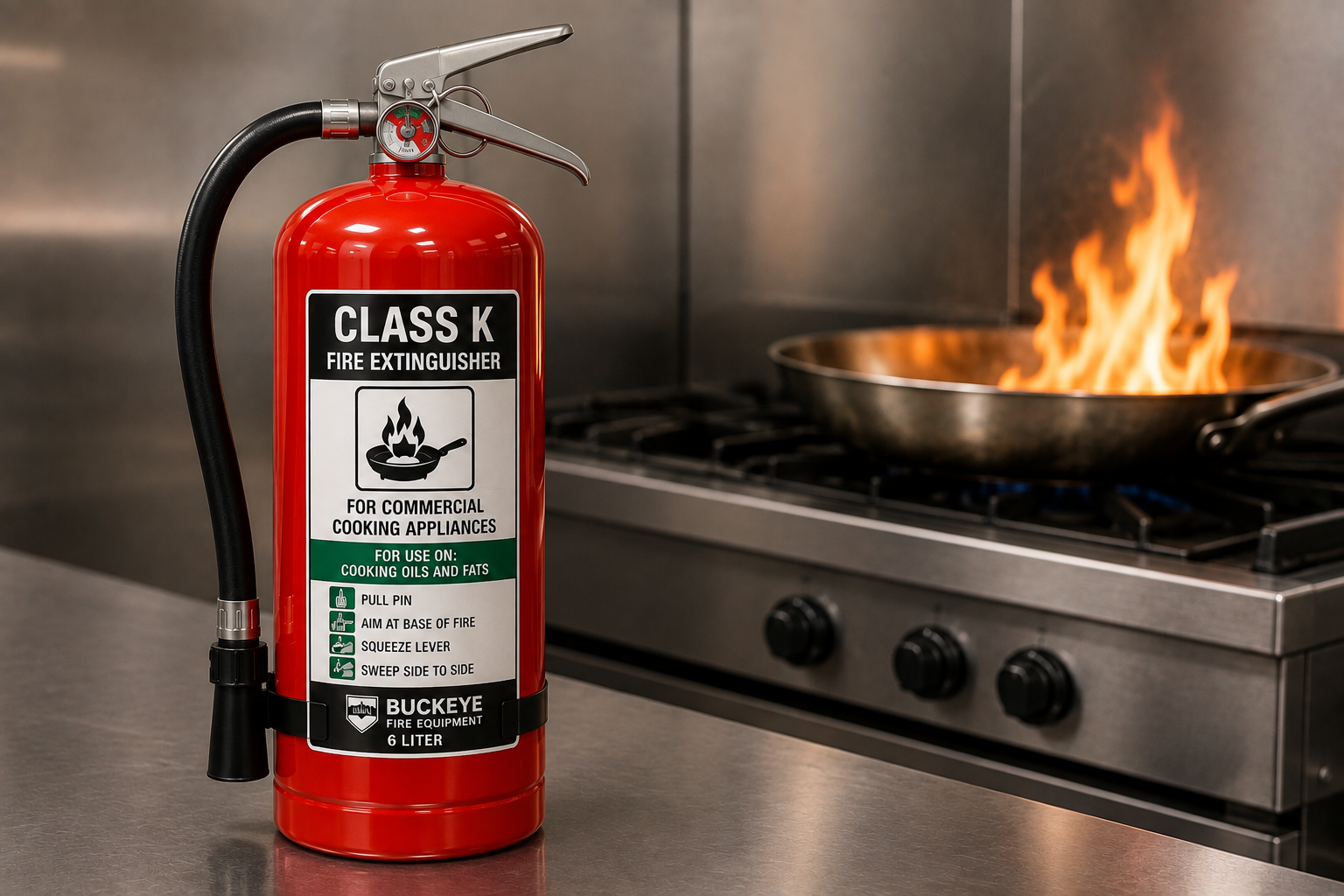
A Class K fire extinguisher is used for fires involving cooking oils, animal fats, and grease found in commercial kitchen equipment. These extinguishers rely on a wet chemical agent that cools and smothers grease fires more effectively than standard extinguishers. Commercial kitchens across New Jersey, Eastern Pennsylvania, and the Delaware Valley depend on this specific class of extinguisher to meet fire code requirements. This article explains how Class K extinguishers work, why they differ from ABC extinguishers, and what kitchen operators should weigh before equipping their space.
Key Takeaways
- Class K fire extinguishers use wet chemical agents designed for cooking oil and grease fires.
- Standard ABC extinguishers are not sufficient for high-temperature commercial kitchen fires.
- Restaurants, food trucks, and institutional kitchens are typically required to have Class K coverage.
- Extinguisher placement and inspection schedules depend on kitchen layout and cooking equipment type.
Match Fire Extinguishers to Delaware Valley Commercial Kitchen Risks
Commercial kitchens in this region face specific fire risks tied to high-volume frying, grilling, and deep-fat cooking. Matching the correct extinguisher class to these hazards is a code requirement, not just a best practice. The sections below outline how different risk factors shape extinguisher selection.
Why Cooking Oil Fires Behave Differently Than Other Fires
Cooking oil and grease fires burn at higher temperatures than ordinary combustibles, which changes how they must be extinguished. Water or standard dry chemical agents can cause the oil to splatter or re-ignite.
A wet chemical agent reacts with the hot oil to form a soapy layer that cools the surface and cuts off oxygen. This chemical reaction, called saponification, is why Class K extinguishers are built specifically for kitchen fires.
How Restaurant Kitchen Layouts Affect Extinguisher Placement
Kitchens with multiple fryers, flat-top grills, or char-broilers typically require Class K coverage near each cooking line. Placement decisions depend on travel distance to the nearest extinguisher and proximity to suppression system nozzles.
Facilities managers in older Delaware Valley buildings often find that renovated kitchen layouts have outgrown their original extinguisher placement plan. Reassessing coverage after any kitchen remodel helps close these gaps.
The Role of Class K Extinguishers Alongside Suppression Systems
A Class K extinguisher works as a secondary line of defense alongside a kitchen hood suppression system, not as a replacement for one. Suppression systems are designed to activate automatically over cooking equipment during a fire event.
The portable extinguisher gives kitchen staff a tool for smaller flare-ups or for extinguishing hot spots after the suppression system discharges. Both systems are typically required together in commercial kitchen fire protection plans.
Food Truck and Mobile Kitchen Considerations
Food trucks and mobile kitchens present unique challenges because of limited space and confined cooking areas. A properly sized Class K extinguisher, often in the six-liter range, fits mobile unit requirements while still meeting UL 300 standards for kitchen fire protection.
Local health and fire officials across New Jersey and Eastern Pennsylvania frequently inspect mobile units for this equipment before issuing operating permits. Operators should confirm placement and mounting meet the applicable local requirements.
Seasonal Demand and Extinguisher Wear in Commercial Kitchens
Kitchens that see heavier volume during back-to-school season or fall event catering put additional strain on cooking equipment and fire protection tools. Grease buildup accumulates faster during high-volume periods, increasing the risk of flare-ups near cooking surfaces.
Extinguishers exposed to heat, humidity, and grease residue in busy kitchens may show wear sooner than those in lower-volume settings. Facilities managers should factor seasonal kitchen activity into their inspection scheduling.
Multi-Tenant and Shared Kitchen Coverage Gaps
Shared commercial kitchens, common in food halls and multi-tenant properties across the region, can create confusion over who is responsible for extinguisher maintenance. Each cooking station using oil or grease needs its own accessible Class K extinguisher, regardless of shared space arrangements.
Property managers overseeing these spaces benefit from documenting extinguisher locations and responsible parties for each tenant. This documentation supports compliance during fire marshal inspections.
What to Consider Before Equipping Your Commercial Kitchen
Selecting the right extinguisher involves more than picking a size off a shelf. Kitchen operators need to weigh code requirements, equipment type, and staff training together. The considerations below help frame that decision process.
Confirming Local Code Requirements Before Purchase
Fire codes adopted by local authorities having jurisdiction, often referred to as the AHJ, determine minimum extinguisher requirements for commercial kitchens. Requirements can vary slightly between municipalities in New Jersey, Eastern Pennsylvania, and Northern Delaware.
Kitchen operators should confirm current local requirements with their fire marshal before finalizing equipment purchases. This step helps avoid failed inspections or costly last-minute changes.
Understanding What Distinguishes a Class K Agent
A Class K extinguisher contains a potassium acetate or potassium citrate based wet chemical agent, not the dry chemical found in ABC extinguishers. This agent is formulated to work at the higher flash points associated with cooking oils and fats.
Standard multipurpose extinguishers lack this chemical composition and are not rated for deep-fat fryer fires. Reading the extinguisher label confirms whether it carries the Class K rating needed for kitchen use.
Sizing Extinguishers to Match Cooking Equipment
Extinguisher capacity should align with the volume and type of cooking equipment in use. A single fryer station may only need a smaller unit, while a full commercial line with multiple appliances often calls for a larger capacity extinguisher.
Undersized units may not fully suppress a fire involving multiple pieces of equipment. Reviewing equipment layout with a fire protection specialist helps determine appropriate sizing.
Training Staff on Proper Extinguisher Use
Even a correctly rated extinguisher is only effective if kitchen staff know how to use it. Training should cover how to approach a grease fire, proper aim and technique, and when to evacuate instead of fighting the fire.
Staff turnover in food service is common, which means training needs to be repeated regularly rather than treated as a one-time event. Documented training also supports compliance during inspections.
Scheduling Inspections and Recharges
Class K extinguishers require annual inspection and periodic hydrostatic testing to remain code compliant and functional. Grease and heat exposure in commercial kitchens can accelerate wear on the extinguisher’s internal components compared to lower-heat environments.
A missed inspection can result in a failed unit going unnoticed until an actual fire event occurs. Setting a recurring inspection schedule keeps kitchens audit-ready year-round.
Weighing Where to Source Equipment and Service
Kitchen operators can source Class K extinguishers through fire protection companies, safety suppliers, or general retailers, though sourcing alone does not guarantee proper installation or documentation. Extinguishers purchased without professional placement review may not meet spacing or mounting requirements.
Pairing equipment purchases with a professional inspection helps confirm the unit is installed correctly and documented for compliance. This approach reduces the risk of gaps discovered during a fire marshal visit.
Protect Your Kitchen With the Right Fire Protection Plan
Commercial kitchens across New Jersey, Eastern Pennsylvania, and the Delaware Valley face fire risks that require more than a generic extinguisher on the wall. Confires Fire Protection Service provides inspection, installation, and maintenance services for fire extinguishers, including Class K units built for kitchen environments.
Contact us to review current kitchen fire protection coverage before the busy fall season begins. A documented, code-aligned plan helps kitchens stay compliant and ready for inspection.
Frequently Asked Questions
What is the difference between a Class B and Class K fire?
Class B fires involve flammable liquids like gasoline or oil-based products outside a kitchen setting. Class K fires specifically involve cooking oils and fats reaching high temperatures in kitchen equipment, requiring a wet chemical agent instead of standard Class B suppressants.
What is a Type K fire extinguisher?
A Type K, or Class K, fire extinguisher contains a wet chemical agent formulated to suppress fires involving cooking oils and animal fats. It is designed for commercial kitchen equipment like fryers, grills, and range tops.
What is the best extinguisher for a Class K fire?
A UL-rated Class K wet chemical extinguisher is the appropriate choice for cooking oil and grease fires. Its chemical composition cools hot oil and forms a barrier that prevents re-ignition, unlike standard multipurpose extinguishers.
Are Class K extinguishers safe for home use?
Class K extinguishers are built for high-volume commercial cooking equipment rather than typical home kitchen fires. Most residential kitchens can rely on a smaller multipurpose extinguisher unless heavy deep-frying equipment is regularly used.
Category: Fire Extinguishers Let us help.
Fill out the form and a Confires fire safety specialist will contact you.
Let us help.
Fill out the form and a Confires fire safety specialist will contact you.