
Fire Doors in Commercial Buildings: Key Requirements, Locations & Best Practices
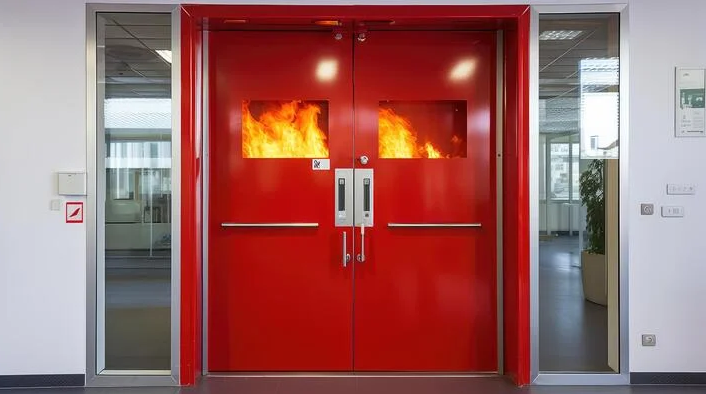
Fire doors are not ordinary doors. They’re part of your building’s first line of defense in a fire. They help contain fire and smoke, maintain safe evacuation paths, and buy time for emergency response. In commercial buildings, proper fire door installation and maintenance isn’t optional, it’s a code requirement.
How Fire Doors Differ from Standard Doors
Fire doors are constructed with fire-resistant materials like steel, mineral cores, or fire-rated glass. They’re rigorously tested and certified to meet performance standards established by organizations like UL (Underwriters Laboratories) or Intertek.
Unlike standard doors, fire doors:
- Have fire rating labels indicating their fire resistance duration (e.g., 20, 60, 90, or 120 minutes).
- Are part of a tested assembly, including the door, frame, hardware, and any glazing.
- Must close automatically and latch securely to prevent the spread of fire and smoke.
- Require specific hardware, such as self-closing devices and fire-rated hinges.
- Must pass annual inspections to ensure they remain in proper working condition.
Where Are Fire Doors Required in Commercial Buildings?
The specific placement of fire doors depends on building occupancy, layout, and local code. However, common required locations include:
- Exit corridors and stairwells: To protect evacuation routes and ensure safe egress during a fire.
- Mechanical and electrical rooms: To isolate potential fire hazards and prevent fire spread.
- Fire-rated barriers and partitions: To maintain fire separation between different building zones.
- Elevator lobbies and shafts: To prevent fire and smoke from spreading vertically through the building.
- Storage areas: Especially if storing flammable or combustible materials, to contain potential fires.
In many cases, 20-minute doors are required in corridors and offices, while 90-minute doors are needed in stairwells or walls that separate different occupancy types.
Common Fire Door Violations
Even well-intentioned building owners can fall out of compliance. Common issues include:
- Propping fire doors open, which compromises their ability to contain fire and smoke.
- Installing non-rated hardware that does not meet fire safety standards.
- Improper field modifications, such as cutting holes in the door for windows or vents.
- Using kick-down door stops that prevent the door from closing automatically.
- Damaged or missing seals that reduce the door’s effectiveness in containing fire and smoke.
How Confires Can Help
Confires provides complete fire door services for commercial and industrial facilities, including:
- Assessing which doors need to be fire-rated based on building codes and occupancy requirements.
- Installing code-compliant assemblies that meet all relevant fire safety standards.
- Performing annual inspections and testing to ensure fire doors are in proper working condition.
- Repairing or replacing non-compliant doors to maintain code compliance.
- Providing documentation for AHJ (Authority Having Jurisdiction) inspections or audits to demonstrate compliance.
We serve New Jersey and Eastern Pennsylvania with expert knowledge and responsive service.
Need Help With Fire Doors?
Don’t leave fire door compliance to chance. Confires helps commercial building owners and managers protect lives and stay compliant.
Contact us today to request a quote for your fire door inspection.
Category: Fire Protection, Security Systems Let us help.
Fill out the form and a Confires fire safety specialist will contact you.
Let us help.
Fill out the form and a Confires fire safety specialist will contact you.