
How to Tell When a Fire Extinguisher Needs Service, Recharge, or Replacement
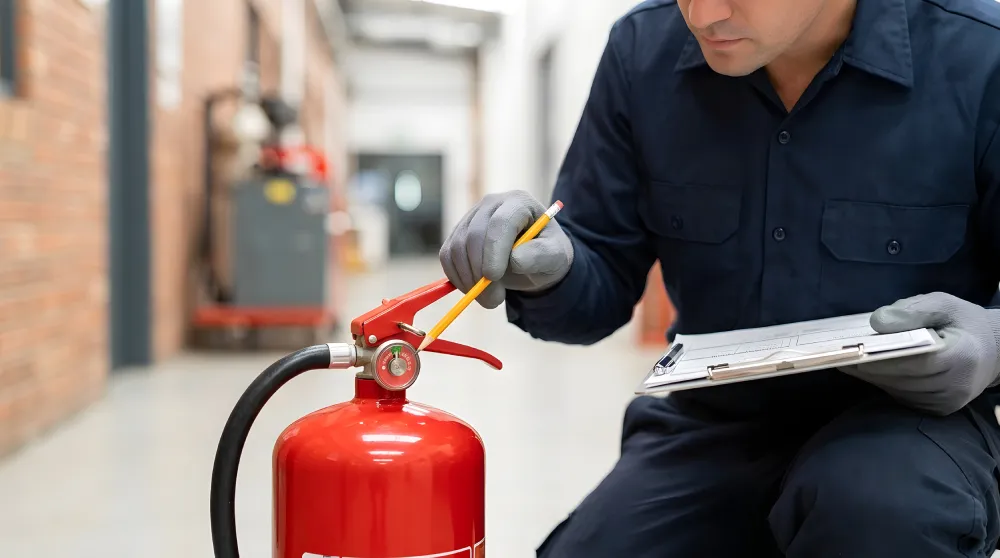
A fire extinguisher needs service when its annual tag is out of date, its gauge is out of range, or it shows damage. It needs recharge after any discharge and replacement when it fails testing or reaches its age limit. Fire extinguisher maintenance goes well beyond a yearly walk-through. This guide explains what each step involves, how to read your tags, and what happens when records fall behind.
Key Takeaways
- Monthly visual checks, annual maintenance, six-year internal maintenance, and hydrostatic testing each serve a different purpose under NFPA 10 requirements.
- Damaged gauges, missing pins, corrosion, and any discharge mean a unit needs service, recharge, or replacement before the next inspection.
- Service tags show the last annual date, the servicer, and six-year or hydrostatic test dates that facility managers should track.
- Missed maintenance can bring fire marshal violations and unreliable extinguishers, so a documented schedule protects your building and its occupants.
Signs Your Fire Extinguisher Needs Service or Replacement
Most extinguishers fail quietly. A unit can look fine on the wall while its internal parts, agent, or shell are past their service dates. These signs help commercial property teams catch problems early.
Overdue Six-Year Maintenance or Hydrostatic Testing Signals a Need for Service
An annual maintenance inspection does not replace the deeper work that NFPA 10 schedules at longer intervals. Six-year maintenance and hydrostatic testing follow separate schedules, even when an extinguisher passes its annual inspection.
Commercial property managers should review all applicable service dates rather than assuming a current annual tag means every maintenance requirement has been met.
A Missing or Expired Six-Year Maintenance Label Indicates Service May Be Due
Six-year maintenance applies to certain stored-pressure dry chemical extinguishers under NFPA 10. A qualified technician empties the unit, examines its internal components and extinguishing agent, and performs the required maintenance before recharging and sealing it.
A six-year maintenance label documents the completed work. If the label is missing or the maintenance interval has expired, the extinguisher should be evaluated by a qualified service professional.
An Overdue Hydrostatic Test or Failed Cylinder Test May Require Service or Replacement
Hydrostatic testing determines whether an extinguisher cylinder can safely withstand pressure. During testing, a qualified technician uses water to pressurize the cylinder according to the applicable requirements.
Stored-pressure dry chemical extinguishers generally require hydrostatic testing every 12 years, while carbon dioxide extinguishers typically require testing every five years. An overdue test requires attention, and a cylinder that fails hydrostatic testing must be removed from service.
Low Pressure, Corrosion, or Physical Damage Indicates an Extinguisher Needs Attention
Visible damage can signal that an extinguisher needs service before its next scheduled inspection. Warning signs include a pressure gauge outside its operating range, a missing safety pin, a broken tamper seal, or a cracked discharge hose.
Dented cylinders, corrosion, and damage around the valve also require professional evaluation. Commercial facilities should address these conditions promptly rather than waiting for the next annual maintenance visit.
Missing, Damaged, or Outdated Service Tags Signal a Need to Verify Maintenance
Fire extinguisher service tags and labels document important maintenance information. Annual maintenance tags identify the service date and servicing company, while separate labels or markings record applicable six-year maintenance and hydrostatic testing.
If a tag is missing, illegible, or outdated, facility managers should verify the extinguisher’s maintenance history and arrange service when necessary. Accurate records also help demonstrate compliance during fire safety inspections.
A Discharged, Non-Rechargeable, or Severely Damaged Extinguisher Needs Recharge or Replacement
Any extinguisher that has been discharged, even briefly, must be removed from service until it is properly recharged or replaced. Rechargeable extinguishers may be returned to service after qualified maintenance, provided their components and cylinders remain suitable for use.
Non-rechargeable extinguishers must be replaced after use and removed from service when they reach applicable retirement limits. Extinguishers with failed cylinders or damage that makes them unsafe for continued use also require replacement.
Next Steps for Maintaining Extinguisher Readiness and Compliance
Readiness comes from a repeatable routine, not a one-time fix. Commercial properties need a clear schedule, trained employees, and reliable records. These steps help facility managers maintain extinguisher readiness and prepare for fire marshal inspections.
Establish a Fire Extinguisher Maintenance Schedule
A workable fire extinguisher maintenance schedule has four layers. Staff inspect units monthly, a qualified provider performs annual maintenance, and applicable six-year maintenance and hydrostatic testing follow the required intervals for each extinguisher type.
Record each unit’s manufacture date and service history in a centralized inventory. Commercial property managers should also include extinguishers in shared spaces and common areas of managed multifamily facilities.
Perform Monthly Fire Extinguisher Inspections Using a Checklist
Monthly inspections help identify problems before they affect extinguisher readiness. OSHA’s portable fire extinguisher standard, requires employers to visually inspect extinguishers at least monthly. Confirm that each unit is visible, unobstructed, and in its designated location.
Check that the safety pin and tamper seal are intact, the pressure gauge indicates the proper operating range when applicable, and there are no visible signs of damage. Document each inspection according to applicable requirements.
Train Employees on the PASS Method and Fire Extinguisher Safety
Employees who are designated and authorized to use portable fire extinguishers should receive appropriate training. The PASS method stands for Pull, Aim, Squeeze, and Sweep.
Training should also cover when extinguisher use is appropriate, how to recognize unsafe fire conditions, and when to evacuate instead of attempting suppression. Commercial facilities such as schools, restaurants, and manufacturing operations should review training needs regularly, particularly when staffing changes occur.
Schedule an October Fire Prevention Month Compliance Review
October is Fire Prevention Month, making it a useful opportunity to review extinguisher readiness before the colder months. Facility managers can inspect extinguisher locations, identify blocked cabinets, review maintenance tags, and check for units approaching six-year maintenance or hydrostatic testing deadlines.
Scheduling necessary service during this review helps address deficiencies before they become overdue. However, October reviews should supplement, not replace, required inspections and maintenance throughout the year.
Correct Fire Extinguisher Compliance Deficiencies Promptly
Overdue maintenance, missing service records, and damaged extinguishers can create compliance concerns during fire safety inspections. Depending on the applicable requirements and the nature of the deficiency, a facility may receive a violation notice or an order to correct the problem.
Under NFPA 10, extinguisher owners are responsible for ensuring that required inspection, maintenance, and testing are performed. Commercial property managers should document corrective actions and confirm local requirements with the authority having jurisdiction (AHJ).
Choose a Qualified Fire Extinguisher Maintenance Company
Select a fire extinguisher maintenance company that provides documented service and can address the types of extinguishers installed at your facility. Ask whether the provider performs annual maintenance, recharging, applicable six-year maintenance, and hydrostatic testing.
Confirm technician qualifications, service availability, and the records provided after each visit. Maintenance costs vary based on extinguisher type, quantity, and required work, so request a site-specific quote. Working with a provider that also services fire alarm systems and exit and emergency lighting can help commercial property managers coordinate fire protection maintenance across their facilities.
Schedule Fire Extinguisher Service With a Local Specialist
Confires Fire Protection Service provides fire extinguisher sales, annual inspection, maintenance, hydro-testing, and recharge or replacement for businesses across New Jersey, Eastern Pennsylvania, and Northern Delaware. Review the details on our fire extinguisher services page.
Contact us to set up service for your building. Confires also offers 24/7 emergency support.
Frequently Asked Questions
What is the PASS method?
PASS stands for Pull the pin, Aim at the base of the fire, Squeeze the handle, and Sweep side to side. Occupants should only use it on small fires with a clear exit behind them.
How often should I replace my extinguisher?
Replace a rechargeable extinguisher when it fails hydrostatic testing or damage makes repair impractical. Non-rechargeable units are removed 12 years after manufacture under NFPA 10, and a technician can confirm the manufacture date on your unit.
Will my local fire department inspect my fire extinguisher?
Fire departments and fire marshals typically check extinguishers during building inspections, but they do not perform routine maintenance. A qualified service provider handles annual maintenance, recharge, and tagging, so inspectors find current records.
How much does fire extinguisher maintenance cost?
Fire extinguisher maintenance cost depends on extinguisher type, unit count, and whether recharge, six-year maintenance, or hydrostatic testing is needed. A site walkthrough lets a provider quote accurately for your building.
Category: Fire Extinguishers Let us help.
Fill out the form and a Confires fire safety specialist will contact you.